Six generations, one valley, and a hall for the dancing.
Hollowfield has belonged to the Wren family since 1836. It is still a working farm, and the sheep still graze the paddocks beyond the creek.
The hollow field
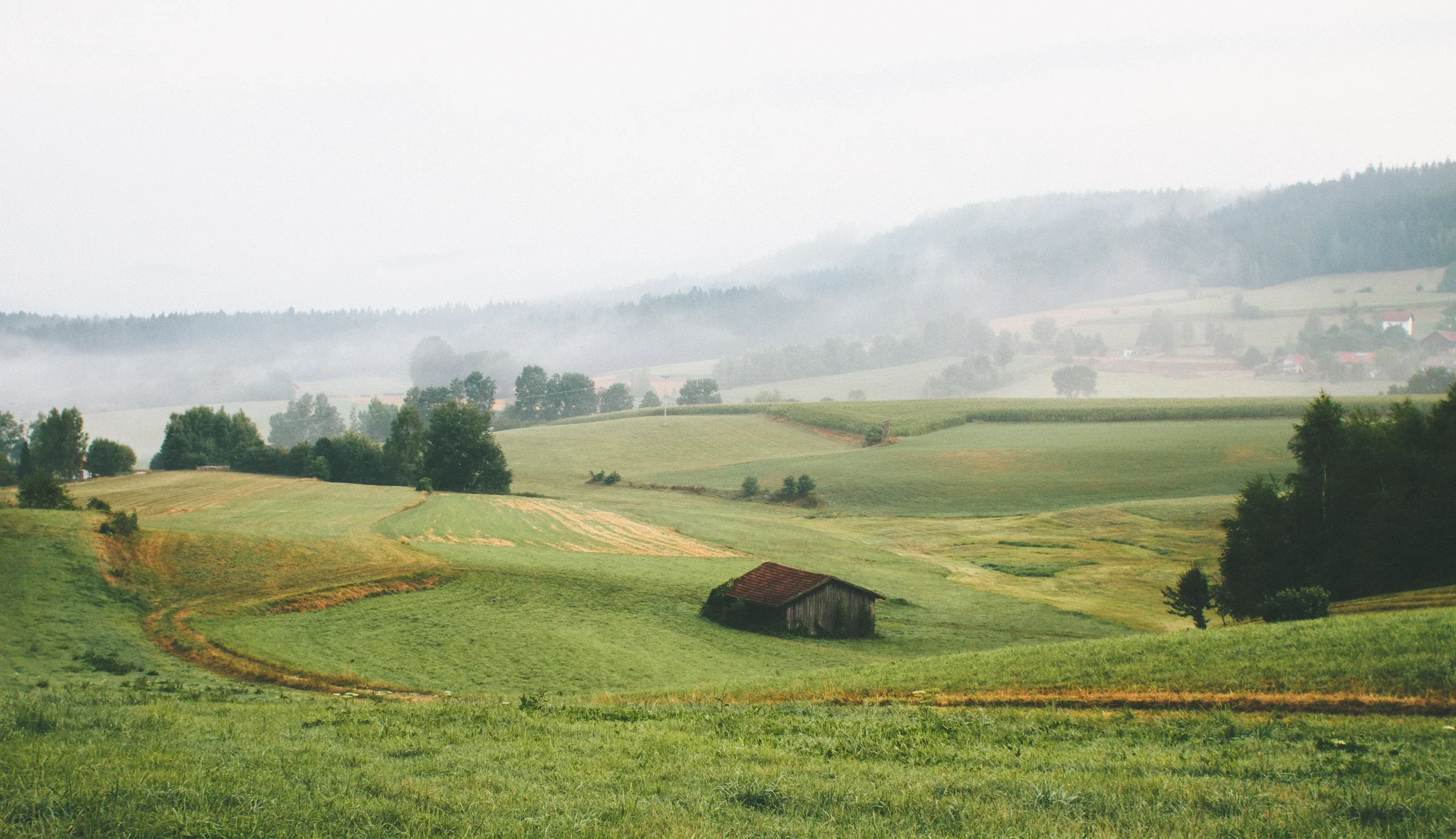
The family tells it like this. When Thomas Wren laid his survey of the valley before the Governor, he was asked what the place was called. He had never named it. He looked down at his own drawing, at the bowl of the valley floor where the morning fog sits so thick that the field seems to be hollow, and said the first thing that came to him.
The grant followed within the year, and family lore insists it was his reward for the survey. The Wrens were never lords of anything, Clare likes to say, except the dance floor.
Thomas’s map, redrawn
Our map follows the lines of the 1836 survey: the road along the top of the valley, the creek along the bottom, and the farm track between them. We have added the hall, the pavilion and the parking field, and kept his trees where he drew them.
The years in between
A short history of the estate, from the grant to the first wedding in the hall.
- 1836
A grant in the King’s name
The Governor of New South Wales signs a grant, in the name of King William IV, for a stretch of land along Tallow Creek to Thomas Wren, the surveyor who had mapped the valley the year before. The grant, with the King’s name across the top, now hangs in the hall porch.
- 1894
The woolshed goes up
Thomas’s grandson builds a woolshed of local hardwood beside the creek flats. Its frame and floor are the ones you dance on today.
- 1912
Margaret’s walled garden
Margaret Wren builds brick walls around the homestead’s kitchen garden to keep out the wind and the wallabies. The beds still supply the kitchen.
- 1920s
Dances in the woolshed
After shearing, the woolshed becomes the valley’s dance hall on Saturday nights, with a fiddle, a piano carted down the farm track, and supper at midnight.
- 2015
A hall for the dancing again
Clare and Sam Wren, the sixth generation, restore the woolshed as the Reception Hall. The first wedding in it is their own, one autumn Saturday.
- 2017
The Garden Pavilion
An open sided pavilion is raised beside the walled garden, from timber milled on the farm, for ceremonies in the open air.


The estate today
Clare runs the events team and Sam runs the farm, which is why the wedding diary and the shearing calendar are kept on the same wall. They take one wedding or event a day, because that is all the valley, the kitchen and the neighbours can do properly.
If you come for a viewing, one of them will probably show you round.
Acknowledgement of Country
We acknowledge the Traditional Custodians of the land on which Hollowfield stands, who cared for this valley for many thousands of years before any survey was drawn, and we pay our respects to their Elders past and present.